
Kinshasa Faces Major Road Infrastructure Gap as Government Accelerates National Development Projects
Kinshasa Has Only 1,000 km of Developed Roads Despite Need for 6,000 km, Says Infrastructure Minister
KINSHASA – The Democratic Republic of Congo’s capital is facing a significant shortage of road infrastructure, with only a fraction of the urban road network required to support its rapidly growing population.
According to Minister of Infrastructure and Public Works John Banza, Kinshasa currently has approximately 1,000 kilometers of developed roads, compared to an estimated requirement of 6,000 kilometers. This means that only about 17% of the city’s road infrastructure needs have been met.
The minister made the remarks during a joint press briefing with Minister of Communication and Media Patrick Muyaya on June 9, 2026.
The briefing focused on the progress of major infrastructure projects underway across the country.
Covering nearly 10,000 square kilometers and home to more than 18 million people, Kinshasa exemplifies the widening gap between rapid urban expansion and the development of essential transport infrastructure.
“We are working progressively to increase the network of developed roads and improve mobility across the capital,” Banza said, while acknowledging that substantial investments will still be required to meet the city’s growing needs.
Provincial Responsibility with State Support
Minister Banza noted that urban roads fall under the exclusive constitutional jurisdiction of provincial governments.
However, the central government continues to play a crucial role by providing financing, conducting technical studies, and supporting large-scale infrastructure projects.
Several urban modernization programs are currently being implemented or prepared in cities including Bunia, Mbuji-Mayi, Kalemie, Lodja, Kabinda, Luputa, Lumumba-Ville, and Tshikapa.
National Road Network Expands
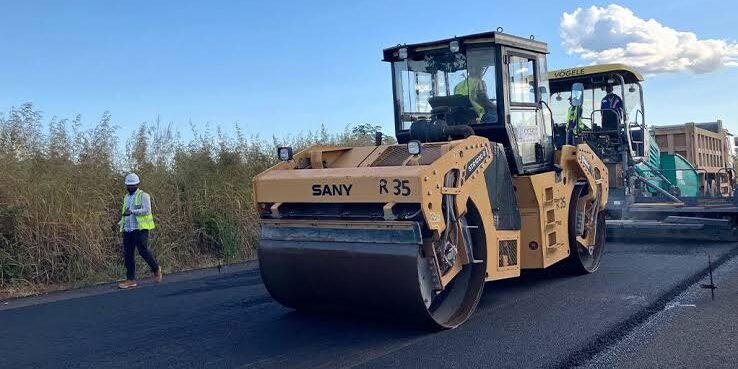
At the national level, Banza reported significant progress in road development. The country’s developed road network has expanded from approximately 3,000 kilometers in 2019 to nearly 8,000 kilometers today.
The expansion forms part of the government’s broader strategy to strengthen territorial integration, facilitate trade, and improve connectivity between major economic centers.
Among the flagship projects is National Road No. 1 (RN1), a strategic corridor stretching nearly 3,300 kilometers from the deep-water port of Banana to Haut-Katanga Province. The route is expected to play a critical role in boosting commerce and enhancing national economic integration.
DRC’s First Dual-Carriageway Highway Project
The Minister also highlighted progress on National Road No. 2 (RN2), whose first phase covers approximately 1,080 kilometers.
The project includes the construction of the Democratic Republic of Congo’s first dual-carriageway highway.
A key component of the project is a 714-meter bridge connecting the provinces of Lomami and Maniema. Once completed, it is expected to become the country’s second-longest bridge after the Maréchal Bridge.
Additional priority infrastructure projects involve National Roads No. 4, No. 6, No. 7, No. 8, No. 16, and No. 17, aimed at strengthening transport links between Kongo Central, Grand Bandundu, Grand Équateur, Maniema, and the eastern provinces.
Toward National Infrastructure Standards
Banza also referenced the outcomes of the first National Infrastructure Conference, organized at the initiative of President Félix Tshisekedi.
One of the conference’s key recommendations was the development of national standards for the design, construction, and quality control of public infrastructure projects.
“Since independence, the country has never fully established comprehensive infrastructure standards,” the minister said.
To address this gap, the government has launched a ten-month consultation and review process to create a national regulatory framework designed to improve the quality, durability, and safety of public infrastructure.
Infrastructure as a Driver of Economic Growth
The government views infrastructure investment as a critical driver of economic development.
In a vast country where long distances continue to hinder trade and economic activity, the expansion of roads, bridges, and highways is considered essential for improving competitiveness, integrating markets, attracting investment, and unlocking regional development opportunities.